
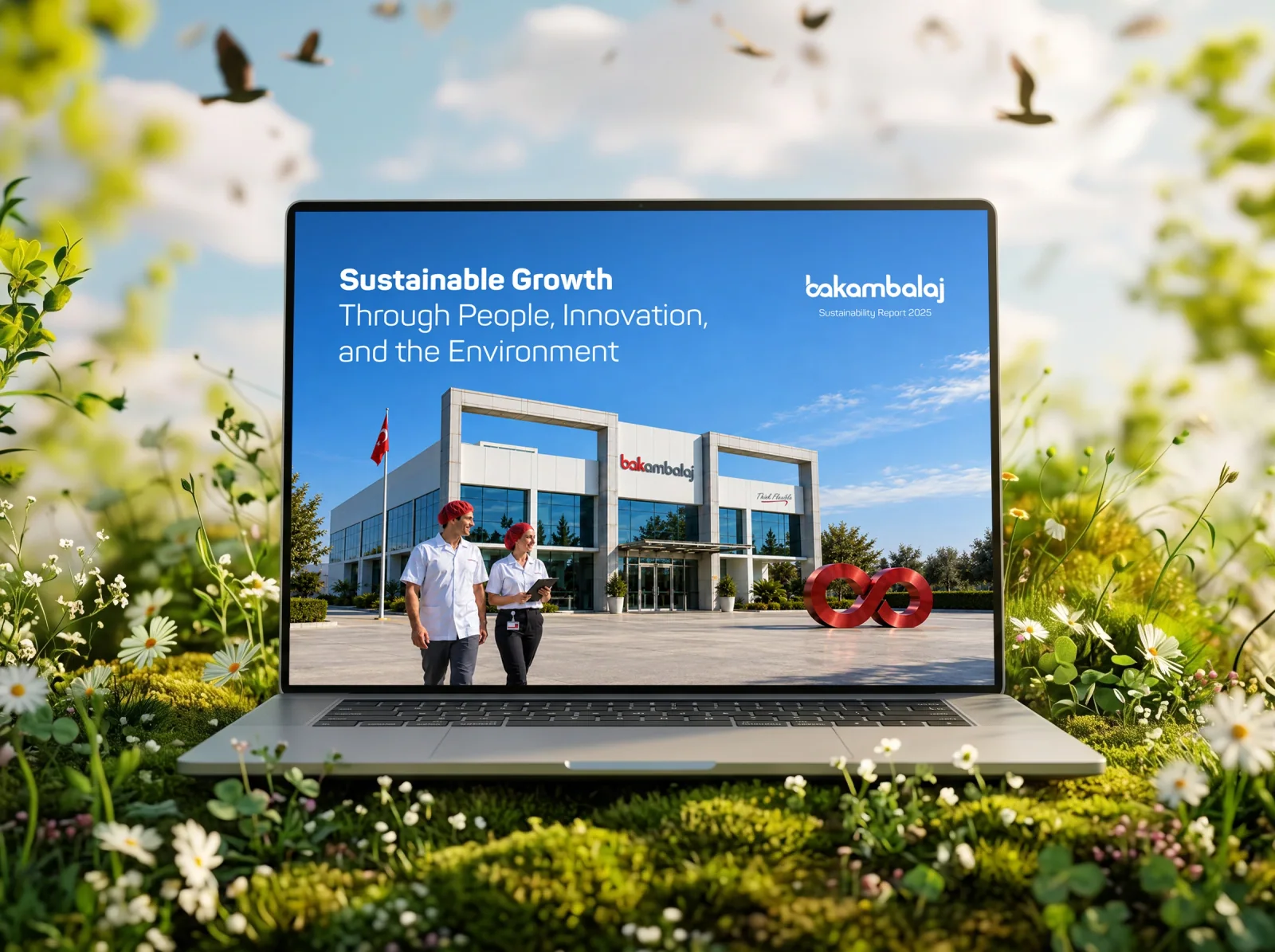
01
Challenge
For Bak Ambalaj, TSRS compliance was a requirement rather than a choice. In its second reporting year, the company needed both to meet all of the standard’s requirements and to provide a report comparable with 2024. Around 70% of its production is exported, primarily to Western Europe, where packaging regulation and customer preferences are shifting toward recyclable packaging that uses less material. Its four production facilities in İzmir are also exposed to physical risks such as water stress and extreme heat. The financial implications of these two pressures needed to be presented clearly for investors.
02
Approach
We structured the report to show how climate-related risks and opportunities affect the company’s financial position. A threshold of 1% of revenue was used to define a material effect, with each risk and opportunity rated as low, medium, or high against that threshold. Scenario analysis used the IPCC’s RCP 4.5 and RCP 8.5 scenarios for physical risks and three NGFS scenarios for transition risks and opportunities. Findings were presented as specific amounts: operating costs for water supply and wastewater discharge were approximately TRY 8.9 million in 2025, while potential production losses from water stress under RCP 8.5 were calculated at TRY 404.2 million. The strategy section examined how regulations such as the EU Packaging and Packaging Waste Regulation (PPWR) could change customer demand, and how low-carbon product families such as Reborn and PapBorn respond to that demand. The transition plan was organized under three headings: operational decarbonization, a low-carbon product portfolio, and climate resilience. Industry-specific metrics appear in a dedicated section titled ‘TSRS 2 Industry-based Guidance Volume 48—Containers and Packaging’.
03
Outcome
The report translated climate-related risks and opportunities from general statements into quantified amounts. Each financial effect was measured against revenue, and the previous year’s scenario analysis was updated using 2025 data and the same methodology. This quantitative approach gave the report a firm foundation. Potential revenue losses arising from changes in market dynamics were calculated at TRY 115.5–577.4 million across the transition scenarios. To address that risk, approximately TRY 39 million was spent on R&D for low-carbon and circular products in 2025. No actual revenue loss from failure to meet customer requirements occurred that year. Operational Scope 1 and location-based Scope 2 emissions decreased year over year. I-REC certificates covered all electricity consumption, resulting in zero market-based Scope 2 emissions. Revenue from low-carbon and climate-friendly products reached approximately TRY 3.42 billion, accounting for around 60% of total revenue.
Explore the related service
TSRS ReportMore projects
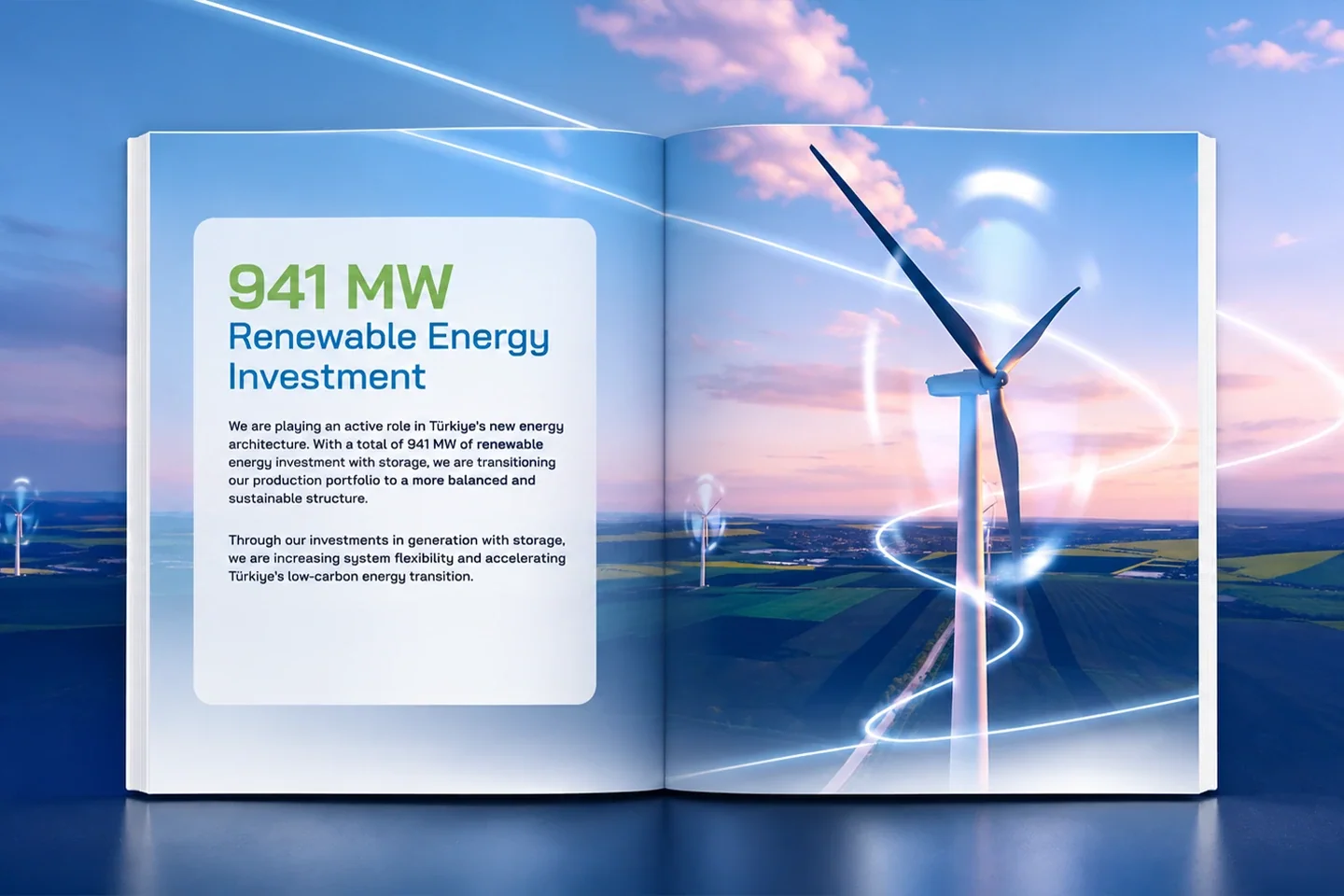
Aksa Enerji
Aksa Enerji’s second TSRS report, spanning Türkiye, Asia, and Africa
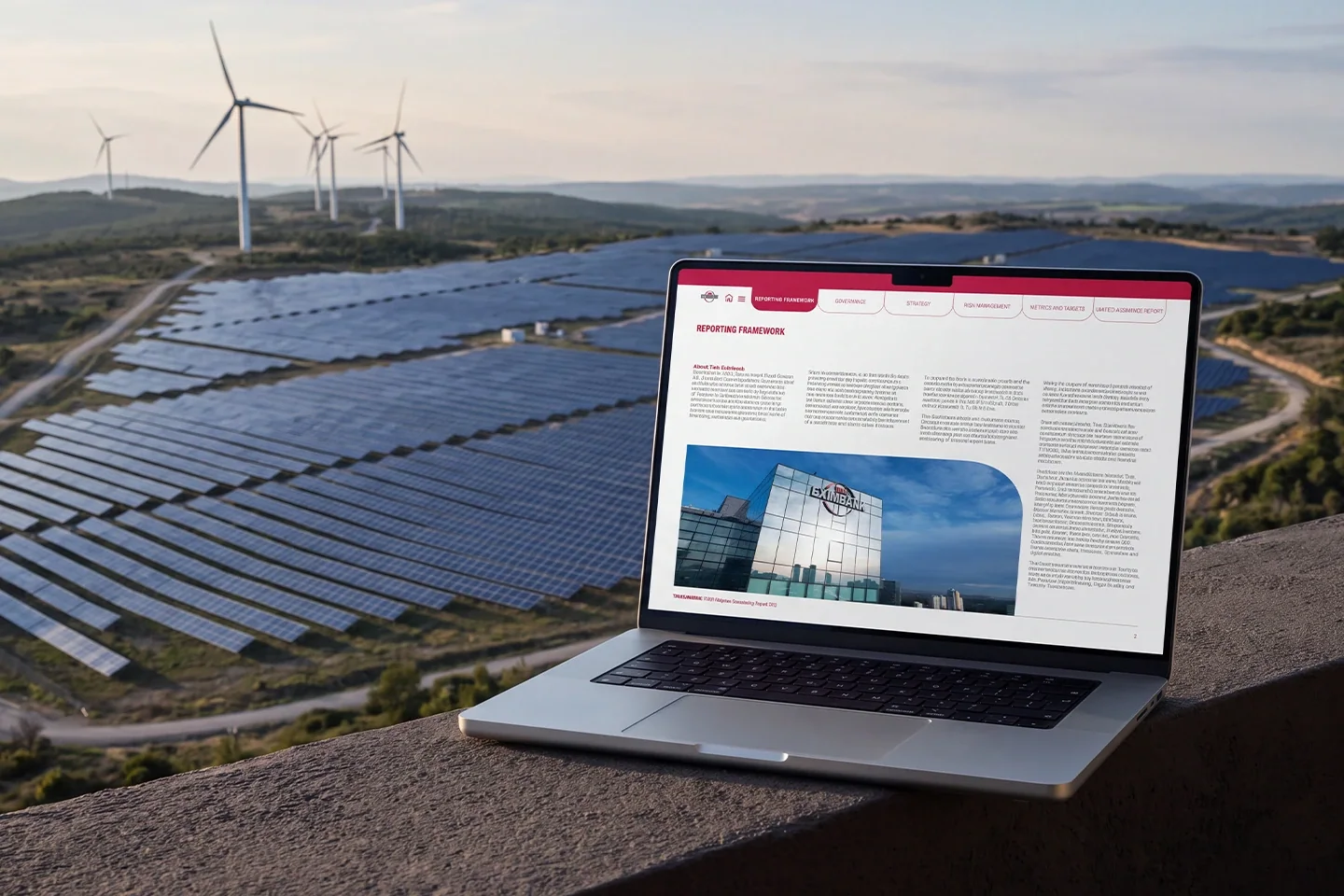
Türk Eximbank
TSRS reporting for Türkiye’s official export credit agency
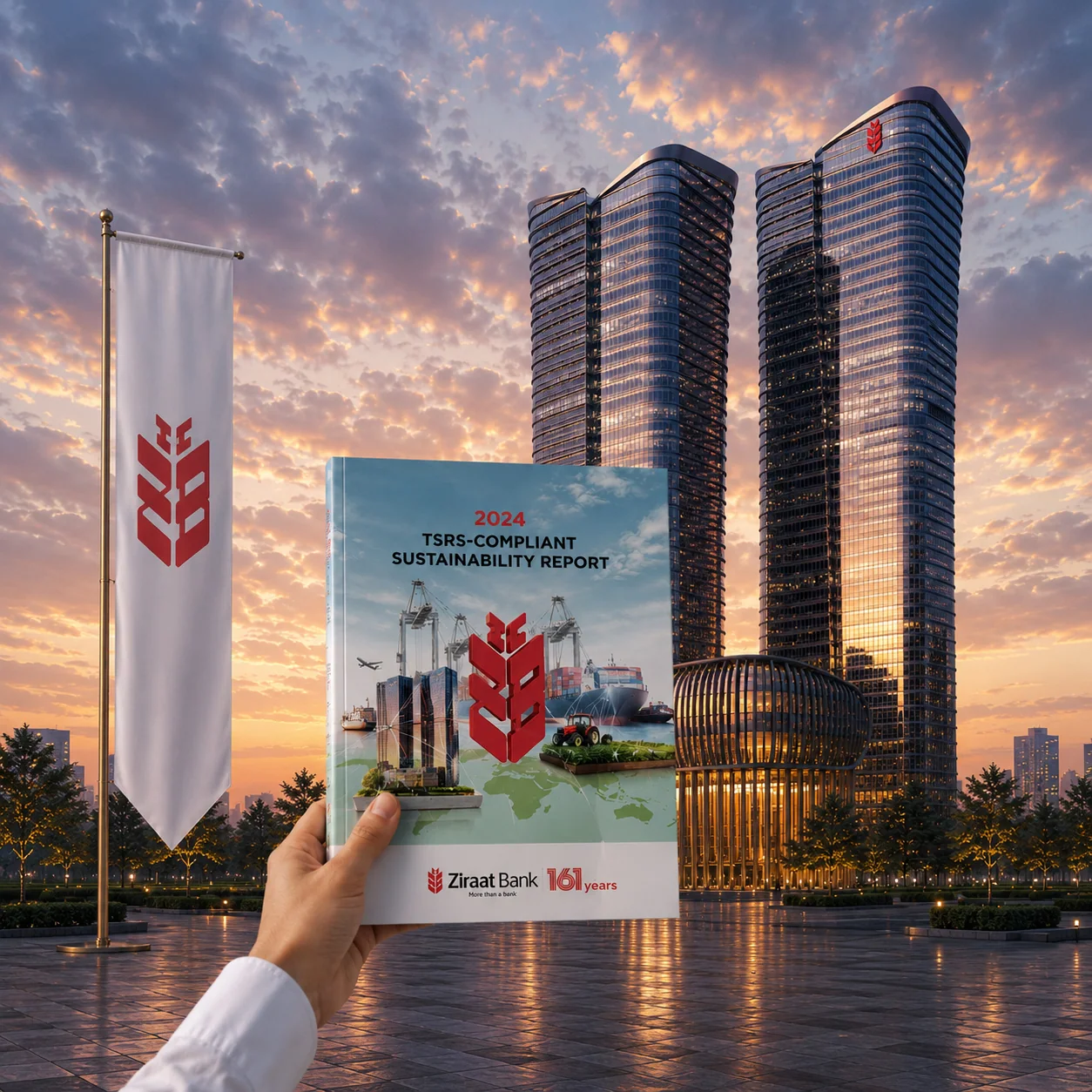
Ziraat Bankası
The first TSRS report for Türkiye’s largest bank
Klimasan
The first TSRS report for a leading Turkish commercial refrigeration manufacturer
Qua Granite
The first TSRS report for a leading Turkish technical granite exporter
BMS Çelik
The first TSRS report for Türkiye’s first steel mesh producer
Hareket
The first TSRS report for a leading Turkish heavy lift and project transport engineering company